Crossbow Basics
How Much Kinetic Energy Do You Need for Crossbow Hunting?
Kinetic energy — not speed — is what drops game cleanly. Learn what KE is, how much you need for deer, hogs,…

As an Amazon Associate, this site may earn from qualifying purchases.

As an Amazon Associate, this site may earn from qualifying purchases.
Crossbow Basics · Updated 2026
Wind is the quiet accuracy-killer. Learn how it pushes your bolt, how to read it, and how to adjust so a breezy day does not wreck your groups.
You can have a perfect setup and flawless form, but a gust of wind can still send your bolt off target. Wind is one of the most underestimated factors in crossbow accuracy, especially at longer ranges. This guide explains how wind affects your bolt, how to read it, and the practical adjustments that keep you on target when the air is moving.
A crossbow bolt is fast, but it is not immune to physics. As it flies, a crosswind pushes it sideways, and a head or tail wind can slightly change its drop. The longer the bolt is in the air, the more the wind moves it — which is why wind barely matters at 20 yards but becomes a big deal at 60 or 80. Lighter bolts get pushed around more than heavy ones.
Before you shoot, take a moment to read the conditions:
⭐ WIND-BEATER
Heavier bolts carry more momentum and resist wind drift better than light ones. On breezy days, a heavier, well-matched bolt keeps your groups tighter.
Specs and current price are shown on Amazon and can change — tap through to confirm.
Once you know the wind, adjust your aim. The basic rule: aim into the wind so it pushes your bolt back onto target. In a left-to-right wind, hold slightly left; in a right-to-left wind, hold slightly right. The stronger the wind and the longer the shot, the more you hold off. Practice in light wind to learn how much your particular setup drifts, and log what you learn.
| Condition | Effect | Adjustment |
|---|---|---|
| Light crosswind, close range | Minimal drift | Tiny or no hold-off |
| Strong crosswind, long range | Significant drift | Hold into the wind more |
| Gusty, unpredictable | Hard to predict | Wait, or shoot closer |
Yes, especially at longer ranges. A crosswind pushes the bolt sideways, and the effect grows with distance and lighter bolts.
Aim into the wind so it pushes your bolt back onto target. Hold off more as wind and distance increase.
Yes. Heavier bolts carry more momentum and resist wind drift better than light ones.
If you must, keep shots close and wait for lulls. For hunting, pass on shots you are not confident in.
Affiliate disclosure: As an Amazon Associate, this site may earn from qualifying purchases at no extra cost to you.
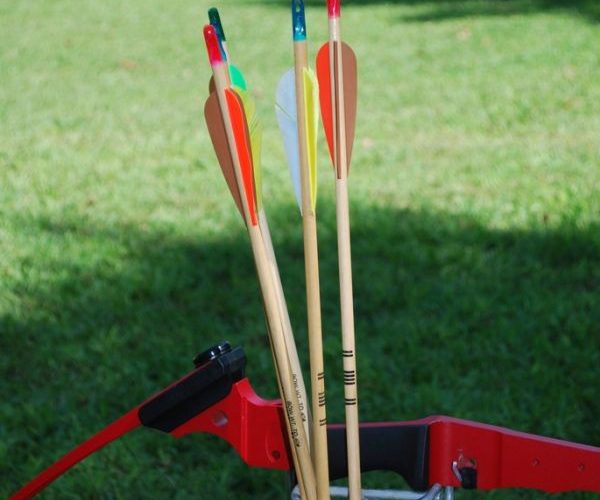
Crossbow Basics
Kinetic energy — not speed — is what drops game cleanly. Learn what KE is, how much you need for deer, hogs,…

Crossbow Basics
What makes a crossbow different from a traditional bow: the horizontal design, the latch that holds the draw, rifle-like aiming, reload trade-offs,…
Crossbow Accessories
Rope cocker or crank? This guide explains how each crossbow cocking device works, their pros and cons, which is right for you,…