Crossbow Accessories
Crossbow Cocking Devices: Rope Cocker vs Crank Explained
Rope cocker or crank? This guide explains how each crossbow cocking device works, their pros and cons, which is right for you,…

As an Amazon Associate, this site may earn from qualifying purchases.
As an Amazon Associate, this site may earn from qualifying purchases.
Deer Hunting · Updated 2026
Bowhunting deer is close, quiet, and deeply rewarding. This step-by-step guide covers scouting, setup, the shot, and the tracking — everything a new bowhunter needs.
Bowhunting a deer is one of hunting’s greatest challenges and thrills. Whether you use a compound bow, a recurve, or a crossbow, success comes down to the same fundamentals: find the deer, stay hidden, make a clean shot, and recover it responsibly. This guide walks you through the whole process in plain English so you can head into the woods prepared and confident.
Great hunts start with homework. Look for trails, tracks, droppings, rubs, and scrapes, and identify where deer bed, feed, and travel between the two. Trail cameras help you learn when deer move. The goal is to set up where you expect a deer to walk during legal shooting hours.
Choose a tree stand or ground blind near a travel route, and always play the wind — set up so your scent blows away from where you expect deer. Get settled early and stay still and quiet. Range nearby landmarks so you know exact distances before a deer arrives.
⭐ MAKE IT COUNT
The broadhead does the work on the animal, so it is worth getting right. Sharp, reliable broadheads that fly like your practice points are the key to a clean, ethical harvest.
Specs and current price are shown on Amazon and can change — tap through to confirm.
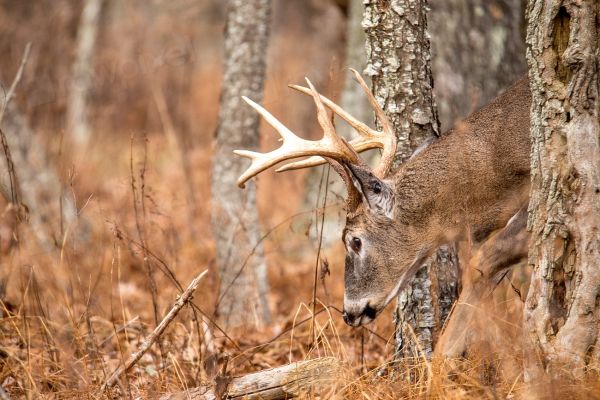
Wait for a deer to reach a comfortable, close distance and a good angle. Aim for the heart-lung vital zone, just behind the front shoulder, about a third of the way up the body on a broadside deer. Draw or aim when the deer’s head is behind cover, settle your breathing, pick a small spot, and release smoothly. Take only high-percentage shots.
| Angle | Take the shot? | Aim |
|---|---|---|
| Broadside | Yes (best) | Behind the shoulder, lower third |
| Quartering away | Yes (excellent) | Toward the far shoulder |
| Quartering toward / head-on | Usually no | Wait for a better angle |
After the shot, note where the deer was standing and where it ran. Then wait — often 30 minutes or more for a good vital hit — before following, so you do not push a wounded animal. Take up the blood trail slowly and patiently, marking sign as you go. Responsible recovery is part of ethical hunting.
For vertical bows, most shots are 20–30 yards. Crossbows can stretch a bit farther, but keeping shots close improves accuracy and ethics.
The heart-lung zone, just behind the front shoulder and about a third of the way up, on a broadside deer.
For a good vital hit, often 30 minutes or more, so you do not push a wounded deer.
It has a learning curve, but with practice, good scouting, and patience, new hunters can absolutely succeed.
Affiliate disclosure: As an Amazon Associate, this site may earn from qualifying purchases at no extra cost to you.
Crossbow Accessories
Rope cocker or crank? This guide explains how each crossbow cocking device works, their pros and cons, which is right for you,…
Crossbow Basics
Kinetic energy — not speed — is what drops game cleanly. Learn what KE is, how much you need for deer, hogs,…
Crossbow Comparisons
A decision-focused crossbow vs compound bow head-to-head: honest pros and cons of each, plus a simple four-question framework to choose the right…