Types of Crossbows Explained: Recurve, Compound, Reverse-Draw and Pistol
As an Amazon Associate, this site may earn from qualifying purchases. How we make money
In this article
- The four main types at a glance
- Recurve crossbows
- Compound crossbows
- Reverse-draw crossbows
- Pistol crossbows
- Other designs you may hear about
- Which type should you choose?
- Frequently asked questions
- Are compound crossbows better than recurves?
- What is a reverse-draw crossbow?
- Can I hunt deer with a pistol crossbow?
- Do all crossbows need a bow press for string changes?
Walk into any archery shop or scroll any crossbow listing and you’ll see the same few designs over and over: recurve, compound, reverse-draw and pistol crossbows. They all launch a bolt from a rail, but they store energy differently. That changes their width, weight, speed, noise and how much maintenance they need. This guide explains each type in plain terms, who it suits, and the trade-offs to weigh before you buy.
How we put this guide together: This comparison is based on how each design works mechanically and on typical manufacturer specifications. It is not based on hands-on testing of specific models. Individual crossbows vary, so always compare the actual specs of the models you’re considering.
The four main types at a glance
| Type | How it stores energy | Typical strengths | Typical trade-offs | Best for |
|---|---|---|---|---|
| Recurve | Long limbs that curve away from the shooter; no cams | Simple, durable, easy string changes, often quieter | Wider, often heavier draw weight for the speed | Shooters who value simplicity and easy upkeep |
| Compound | Shorter limbs plus cams and cables | Narrower, often faster, wide choice of models | More parts to maintain; may need a bow press for string changes | Most hunters, especially in blinds and stands |
| Reverse-draw | Compound system with limbs facing back toward the shooter | Compact, balanced weight closer to the body, long power stroke | Usually more expensive; fewer models | Hunters wanting a short, balanced crossbow |
| Pistol | Small one-piece limb, low draw weight | Cheap, light, fun for targets | Low power; not suitable or legal for most game | Backyard target practice and plinking |
Recurve crossbows
A recurve crossbow uses long limbs whose tips curve away from the shooter. There are no cams or cables, just limbs and a string. That simplicity is the main appeal:
- Easy maintenance. Many recurve strings can be changed at home without a bow press.
- Fewer failure points. With no cams or cables to go out of tune, there is less to go wrong in the field.
- Often quieter than compounds of similar power, though modern string suppressors narrow the gap.
The trade-offs are width (recurve limbs need room to flex, so these crossbows are wider) and a heavier draw weight to reach a given speed. Excalibur is the best-known modern recurve maker, and our compound vs. recurve comparison goes deeper.
Compound crossbows
Compound crossbows add cams (wheels) and cables to shorter, stiffer limbs. The cams give a mechanical advantage, so the crossbow can store more energy in a narrower frame. That’s why compounds dominate the market:
- Narrower, which matters in ground blinds and tree stands.
- Often faster for a given draw weight.
- The widest choice of models and price points.
The downside is complexity. Cams, cables and string have to stay in time, and string or cable replacement usually needs a crossbow press, which for most owners means a trip to an archery shop. Regular waxing and inspection matter more (see our maintenance guide).
Reverse-draw crossbows
A reverse-draw crossbow is a compound with the limbs mounted the other way round, so the limb tips point back toward the shooter. That arrangement:
- moves the weight back toward your body, so the crossbow feels balanced and steady to hold;
- allows a longer power stroke in a short overall length;
- can reduce noise and vibration.
Reverse-draw models tend to sit at the higher end of the price range, and there are fewer to choose from. They’re worth a look if compactness and balance are your top priorities.
Pistol crossbows
Pistol crossbows are small, one-handed or two-handed crossbows with low draw weights, often around 50–80 lb. Many cock with a lever built into the frame. They’re inexpensive and fun for backyard target shooting, but their energy is low. They are not suitable for deer and are not legal for most hunting. Treat them as target toys that still demand full safety precautions. See our look at the 80 lb self-cocking pistol crossbow for an example.
Other designs you may hear about
- Integrated-crank crossbows: compounds with a cocking crank built into the stock. Easier to cock, and some can be decocked without shooting.
- Vertical vs. horizontal: almost every modern crossbow is horizontal; see our explainer.
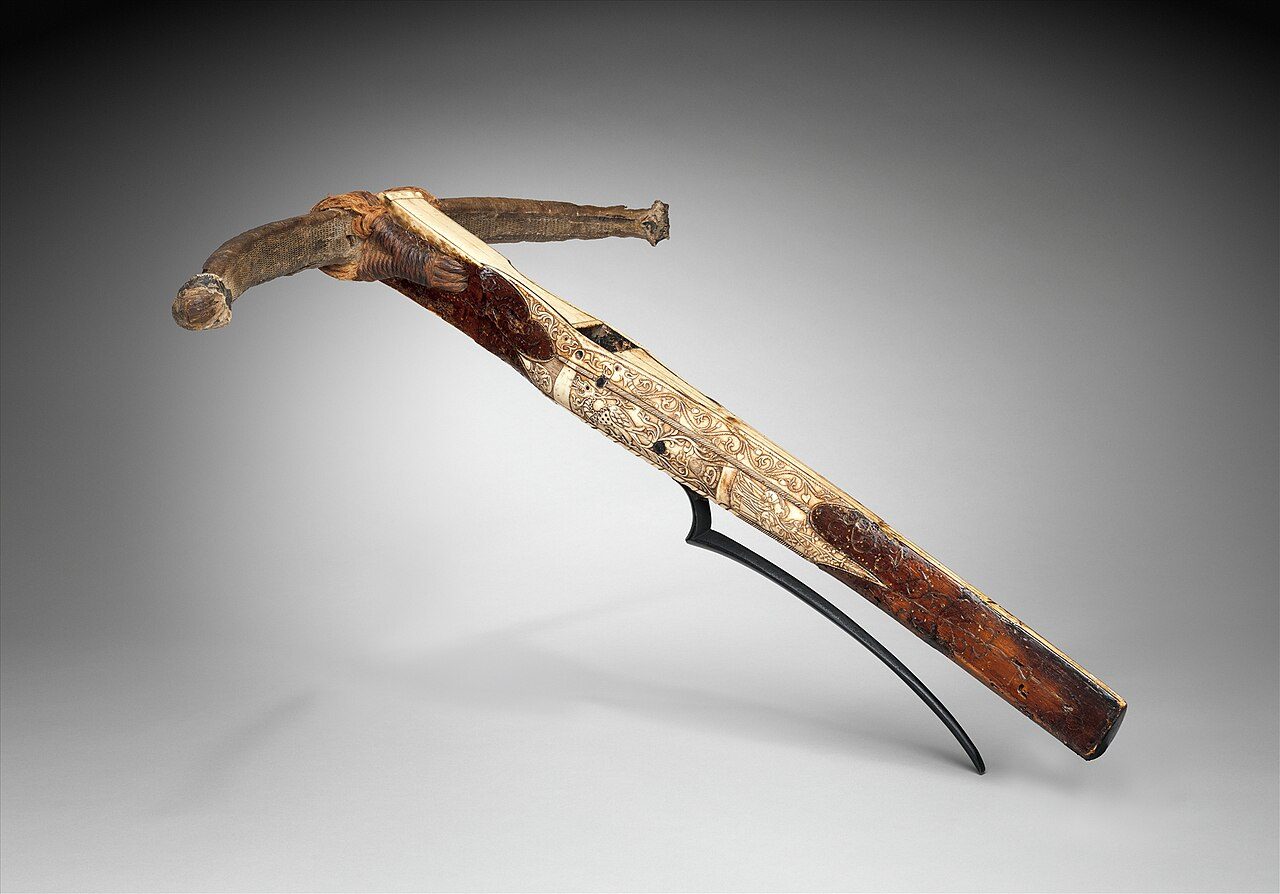
- Historic types: arbalests and repeating crossbows are fascinating history, but not modern hunting tools. See arbalest vs. crossbow.
Which type should you choose?
- Your first hunting crossbow, and you want low upkeep: a recurve, or a well-reviewed compound package.
- You hunt from tight blinds or stands: a narrow compound or a reverse-draw.
- Cocking effort is a concern: any type with a crank, or a model with an integrated crank.
- Just backyard fun: a pistol crossbow, used safely.
Whatever you choose, check your state’s crossbow rules (some states set minimum draw weights for hunting) in our state regulations guide, then read how to choose your first crossbow.
Frequently asked questions
Are compound crossbows better than recurves?
Not universally. Compounds are usually narrower and faster; recurves are simpler and easier to maintain. The better choice depends on where you hunt and how much maintenance you want to do.
What is a reverse-draw crossbow?
A compound crossbow with its limbs facing backward toward the shooter. That makes it more compact and better balanced, usually at a higher price.
Can I hunt deer with a pistol crossbow?
Generally no. Pistol crossbows have very low draw weights and energy, and most states’ hunting rules exclude them. Check your state regulations.
Do all crossbows need a bow press for string changes?
Most compound and reverse-draw crossbows do. Many recurve strings can be changed at home with a simple stringing aid. Check your owner’s manual.