Crossbow Safety Rules: 10 Habits Every Shooter Needs

As an Amazon Associate, this site may earn from qualifying purchases. How we make money
In this article
- The ten core crossbow safety rules
- 1. Treat every crossbow as if it is cocked and loaded
- 2. Keep your fingers and thumb below the rail
- 3. Never dry-fire
- 4. Use matched bolts, seated correctly
- 5. Point the crossbow in a safe direction, always
- 6. Know your target and what is beyond it
- 7. Uncock safely, the way your manual says
- 8. Inspect before every session
- 9. Transport and store it uncocked
- 10. Take a hunter education course
- Safety in the tree stand
- Safety around other people
- Quick-reference checklist
- Allen Titan Crossbow De-Cocking Head
- Frequently asked questions
- What is the most common crossbow injury?
- Is it ever OK to dry-fire a crossbow?
- Can I leave my crossbow cocked overnight?
- Do I need a hunter education course to hunt with a crossbow?
- The bottom line
A modern crossbow stores a lot of energy in a small package. A hunting crossbow can launch a bolt at more than 350 feet per second, and the string moves fast enough to injure a finger in a fraction of a second. None of that makes crossbows dangerous in careful hands, but it does mean the safety rules are not optional. This guide covers the rules that matter most, why each one exists, and the habits that keep them automatic.
How we put this guide together: These rules are drawn from standard hunter-education guidance and the safety sections that crossbow manufacturers print in their owner’s manuals. Your own crossbow’s manual always comes first. If anything here conflicts with it, follow the manual.
The ten core crossbow safety rules
1. Treat every crossbow as if it is cocked and loaded
Never assume a crossbow is safe because you “know” it isn’t cocked. Check the string position and the rail every time you pick it up, hand it to someone, or take it out of a case. The habit costs a second; skipping it is how accidents start.
2. Keep your fingers and thumb below the rail
This is the rule most specific to crossbows, and the injury it prevents is serious. When the crossbow fires, the string sweeps across the top of the rail (the flight deck). Any finger or thumb that rises above the rail is in its path. Most modern crossbows have a finger guard or flange on the foregrip; keep your supporting hand behind and below it on every shot, including practice shots.
3. Never dry-fire
A dry fire is releasing the string with no bolt on the rail. Without a bolt to absorb the energy, the limbs, string and cables take the full shock. That can crack limbs, break the string or damage cams, and parts can fail violently. Many crossbows have an anti-dry-fire (ADF) mechanism, but it is a backup, not a reason to relax. If a dry fire ever happens, stop shooting and have the crossbow inspected by the manufacturer or a qualified archery shop before you use it again.
4. Use matched bolts, seated correctly
Shoot only bolts that meet your crossbow manufacturer’s specifications for length, weight and nock type. A bolt that is too light can behave like a partial dry fire. A nock that isn’t seated against the string can cause a misfire or let the bolt slide off the rail. Inspect bolts before each session and discard any with cracks, splinters or damaged nocks.
5. Point the crossbow in a safe direction, always
Whether it is cocked or not, the front of the crossbow should never point at anything you aren’t willing to shoot. This applies while cocking, loading, climbing, crossing obstacles and handing the crossbow to someone else.
6. Know your target and what is beyond it
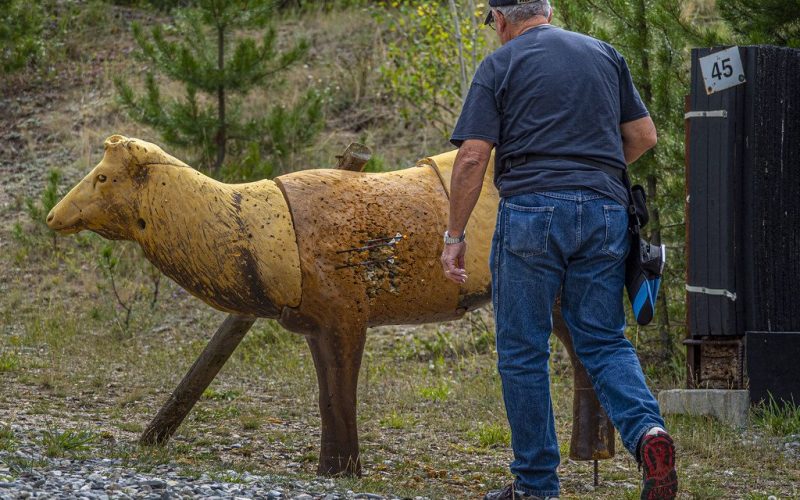
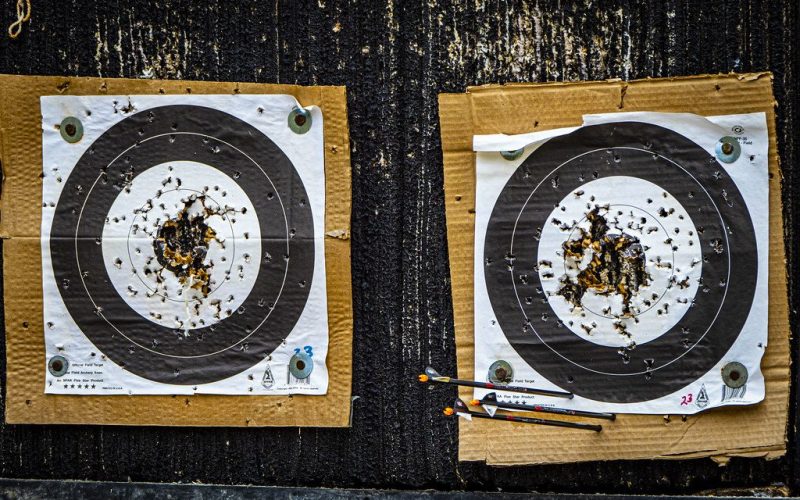
A bolt that misses or passes through a target keeps travelling. Be certain of what you’re shooting at, and make sure there is a safe backstop behind it. On a practice range, use a target rated for your crossbow’s speed (see our targets guide) with a solid berm or open safe ground behind it.
7. Uncock safely, the way your manual says
Many crossbows can’t be let down by hand and must be uncocked by shooting a bolt into a safe target, often using a dedicated decocking bolt or head. Some newer models have a crank system that lets you decock without shooting. Never try to ease the string forward with your hands unless your manual specifically allows it. Our step-by-step guide covers how to uncock a crossbow.
8. Inspect before every session
Look for frayed or broken string strands, cracked or chipped limbs, loose bolts and screws, and damage to the cables and serving. Check that the safety engages and that the scope mount is tight. A two-minute inspection catches most problems before they become failures. Our maintenance guide walks through the checks.
9. Transport and store it uncocked
Never travel, climb or store a crossbow while it is cocked. Many states also require crossbows to be uncocked, and in some cases cased, during transport. Check your state’s rules. Our storage and transport guide has the details.
10. Take a hunter education course
Most US states require a hunter education course before you can buy a hunting license. Many of them include archery and crossbow content, and some states offer separate bowhunter education. Even if your state doesn’t require one for you, the course is worth taking. You can find your state’s course through the International Hunter Education Association or your state wildlife agency.
Safety in the tree stand
Falls from elevated stands are a common cause of serious hunting injuries, and crossbow hunters often hunt from height. The basics:
- Wear a full-body fall-arrest harness, attached to the tree from the moment you leave the ground until you’re back down.
- Never climb with a crossbow in your hands. Use a haul rope to raise and lower it, always uncocked, with no bolt on the rail.
- Check your stand, straps and steps before every season and follow the manufacturer’s weight limits.
- Let someone know where you’re hunting and when you expect to be back.
Safety around other people
- Wear blaze orange where your state requires it, and consider wearing it when walking in and out even where it isn’t required.
- Never shoot at movement, sound or a shape you can’t fully identify.
- Keep crossbows and bolts locked away from children and anyone who hasn’t been trained.
- Don’t handle a crossbow after drinking alcohol or while tired enough to make mistakes.
Quick-reference checklist
| Before you shoot | While shooting | After shooting |
|---|---|---|
| Inspect string, limbs, cables and bolts | Fingers and thumb below the rail | Uncock the safe way: decocking bolt into a target |
| Confirm the safety and ADF work | Safe direction at all times | Case the crossbow and secure the bolts |
| Set up a rated target and safe backstop | Only matched, undamaged bolts | Note any wear or damage to fix before next time |
Useful safety gear
Allen Titan Crossbow De-Cocking Head
If your crossbow has to be uncocked by shooting, a decocking head on a spare bolt is the simplest safe way to do it at the end of a session.
- Threads onto most standard crossbow bolts
- Steel and soft-silicone head absorbs the impact
- Reusable for many end-of-session decocks
- Always discharge into a suitable target
Details above are from the seller’s Amazon listing (checked October 2026). Specs and price can change, so confirm on Amazon before you buy.
Frequently asked questions
What is the most common crossbow injury?
Finger and thumb injuries from the string are among the injuries crossbow-specific safety guidance warns about most often, which is why keeping your hand below the rail is rule number two. Falls from tree stands cause many of the most serious hunting injuries overall.
Is it ever OK to dry-fire a crossbow?
No. Dry-firing can damage the limbs, string and cams. If it happens accidentally, stop and have the crossbow inspected before shooting again.
Can I leave my crossbow cocked overnight?
Most manufacturers advise against leaving a crossbow cocked for long periods, and it’s unsafe to store or transport one cocked. Uncock it at the end of each session. Check your owner’s manual for your model’s limits.
Do I need a hunter education course to hunt with a crossbow?
Most states require hunter education to buy a hunting license, and requirements vary by age and state. Check with your state wildlife agency.
The bottom line
Crossbow safety comes down to a few habits practised every time: fingers below the rail, never dry-fire, matched bolts, a safe direction, and uncocked storage and transport. Build those habits on the practice range and they’ll be automatic when it counts. Before your first shot, read your crossbow’s manual cover to cover, then go through our guide to choosing your first crossbow if you’re still shopping.