Crossbow Targets Explained: Bag vs Foam Block vs 3D
As an Amazon Associate, this site may earn from qualifying purchases. How we make money
In this article
- The three main target types
- Bag targets
- Foam block targets
- 3D targets
- Understanding speed (FPS) ratings
- Setting up a safe practice area
- Making your target last longer
- Morrell Double Duty 450 FPS Bag Target
- Frequently asked questions
- Can I shoot broadheads into a bag target?
- What FPS rating do I need?
- How far away should I put my target?
- Is a 3D target worth it?
Your target is the piece of gear you’ll use more than any other, and the one that does the most to protect your bolts. Modern crossbows are fast, often 350 feet per second or more, and an ordinary archery target that works fine for a recurve bow can be shot through or chewed up quickly. This guide explains the main target types, what speed ratings mean, and how to set up a safe practice area.
How we put this guide together: This guide explains how the main target designs work and how manufacturers rate them. We haven’t run our own penetration tests. Always check the specific target’s speed rating and point-type rating against your crossbow before you shoot it.
The three main target types
| Type | How it stops bolts | Points | Pros | Cons |
|---|---|---|---|---|
| Bag target | Friction from tightly packed fill | Field points only | Very easy bolt removal, affordable, portable | Not for broadheads; fill can shift over time |
| Foam block / layered foam | Dense or layered foam closes around the shaft | Field points; some are rated for broadheads | Multiple faces, long life, broadhead options | Bolt removal can be harder; heavier |
| 3D target | Foam animal shape with a replaceable vital insert | Usually field points; check the rating | Realistic angles for practising shot placement | More expensive; only the insert takes most hits |
Bag targets
A bag target is a tough outer shell packed with fill. The bolt stops through friction, so it pulls out easily, which saves your hands and your bolts. Bags are the best everyday practice target for field points. They are not for broadheads: broadhead blades cut the fill and the shell, and they can be very hard to remove.
Foam block targets
Foam blocks use dense or layered foam that closes around the bolt. They often have shooting faces on several sides, so you can rotate them for longer life. Some are designed and rated for broadheads, which lets you confirm your broadheads hit the same spot as your field points before a hunt (see sighting in).
3D targets
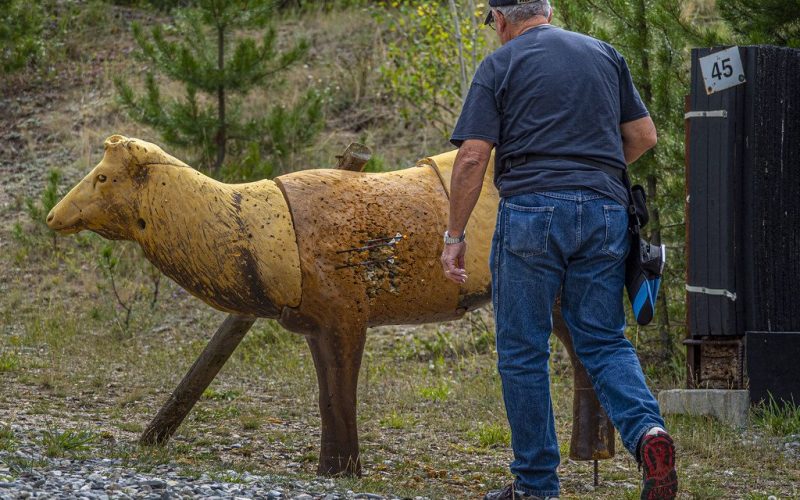
3D targets are life-size foam animals, usually deer, with a replaceable core in the vital area. Their value is realism: you can practise from the angles you’ll see in the field, which builds the shot-placement judgment covered in our shot placement guide. Check the speed rating, and replace the insert when it wears.
Understanding speed (FPS) ratings
Most crossbow-capable targets carry an FPS rating, the maximum bolt speed they’re designed to stop. Match it to your crossbow:
- Choose a target rated at or above your crossbow’s speed. Many crossbow-specific targets are rated around 400–450 FPS.
- Remember that a target’s ability to stop bolts declines as it wears. Retire targets that bolts start passing deeper into.
- Rotate your aiming points so you don’t wear out one spot.
Setting up a safe practice area
- Backstop: always have a safe backstop behind the target, such as an earth berm or open, safe ground with nobody downrange. A target is not a backstop on its own: bolts miss and occasionally pass through.
- Distance: start close, around 20 yards, while you zero, then work out to the distances you’ll hunt.
- Height: raise the target so you’re shooting into it at a natural angle, not into the ground.
- Local rules: check that backyard shooting is allowed where you live; some towns restrict it.
- Safety basics: fingers below the rail, never dry-fire. See crossbow safety rules.
Making your target last longer
- Use field points on bags, and save broadheads for broadhead-rated targets.
- Pull bolts straight out along their line of entry, not at an angle. A bolt puller helps.
- Store targets out of direct sun and rain when you’re not using them.
- Lightly lubricating your bolt tips can make removal easier, if the target maker allows it.
Everyday practice pick
Morrell Double Duty 450 FPS Bag Target
A crossbow-rated bag target for routine field-point practice, with easy bolt removal.
- Rated up to 450 FPS for crossbows and compounds
- For field points only, not broadheads
- Easy arrow removal
- Multiple target faces to practise on
Details above are from the seller’s Amazon listing (checked October 2026). Specs and price can change, so confirm on Amazon before you buy.
Frequently asked questions
Can I shoot broadheads into a bag target?
No. Broadheads cut the fill and shell and can be extremely hard to remove. Use a foam target rated for broadheads.
What FPS rating do I need?
At least your crossbow’s speed. Many crossbow targets are rated to around 400–450 FPS; check yours against your crossbow’s spec.
How far away should I put my target?
Start around 20 yards while sighting in, then practise at every distance you plan to shoot in the field.
Is a 3D target worth it?
If you hunt, yes. Practising on a realistic shape from real angles is one of the best ways to make ethical shot placement automatic.