Crossbow Shot Placement: Where to Aim for a Clean Shot

As an Amazon Associate, this site may earn from qualifying purchases. How we make money
In this article
- Shot placement: where to aim for a clean shot 🎯
- In this guide
- The vital zone explained
- How angles change your aim
- Shot angle guide
- A 3D Deer Target
- How to practice shot placement
- After the shot
- Mistakes to avoid
- FAQ
- Where do you aim on a deer with a crossbow?
- Is a quartering-away shot good?
- Should I take a quartering-toward shot?
- How long should I wait before tracking?
- Shot checklist ✅
Hunting Skills · Updated 2026
Shot placement: where to aim for a clean shot 🎯
Good shot placement is the heart of ethical hunting. This guide shows you exactly where to aim on a deer, how angles change everything, and how to make every shot count.
The most important skill in bowhunting is not speed or gear — it is shot placement. Putting your bolt in the right spot means a quick, humane harvest and an easy recovery. Miss the mark and you risk wounding an animal. This guide breaks down the vital zones, the angles that matter, and the mindset that leads to clean, confident shots.
💡 Quick answer: On a broadside deer, aim for the heart-lung zone just behind the front shoulder, about a third of the way up the body. Wait for a good angle, pick a small spot, and only shoot when the vitals are open.
In this guide
- The vital zone explained
- How angles change your aim
- Shot angle guide
- How to practice
- After the shot
- FAQ
- Shot checklist
The vital zone explained
The vital zone is the heart and lungs. It is a relatively large, forgiving target that leads to a fast, ethical harvest. On a broadside deer, picture a spot just behind the front shoulder, roughly a third of the way up from the bottom of the chest. Hitting there puts your bolt through both lungs — the highest-percentage shot in hunting.
Why this works: the lungs are large and shutting them down quickly is humane. Aiming behind the shoulder also avoids the heavy shoulder bone, which can stop a bolt.
How angles change your aim
Deer rarely stand perfectly broadside, so you must read the angle. The golden rule: aim so your bolt passes through both lungs. That means your aim point shifts depending on which way the animal faces.
Shot angle guide
| Angle | Shoot? | Where to aim |
|---|---|---|
| Broadside | Yes (best) | Behind the front shoulder, lower third |
| Quartering away | Yes (excellent) | Aim to exit through the far shoulder |
| Quartering toward | Usually no | Vitals are blocked by the shoulder |
| Head-on / straight away | No | Too little vital exposure; wait |
ℹ️ Patience pays: If the angle is wrong, wait. A deer often takes a few steps into a better position. A passed shot beats a wounded animal every time.
⭐ PRACTICE TOOL
A 3D Deer Target
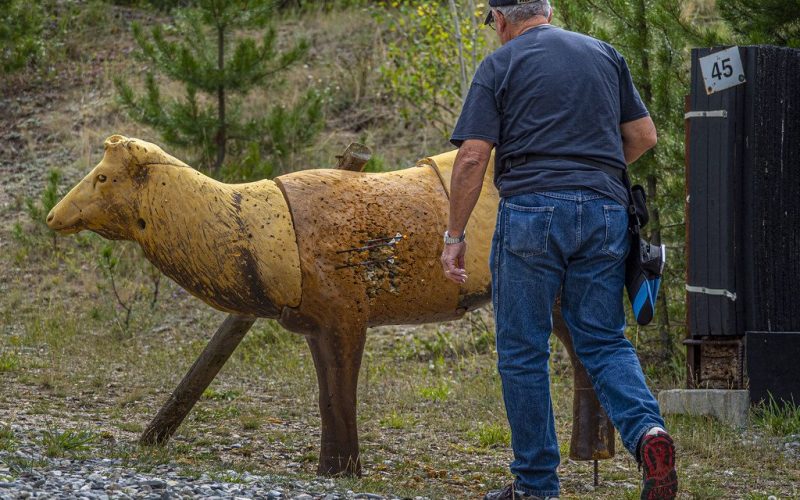
The best way to master shot placement is to practice on a life-size 3D target. It trains your eye to find the vitals from real angles, so the shot feels automatic in the field.
- ✅ Life-size shape trains real-world aiming
- ✅ Practice broadside and quartering angles
- ✅ Builds confidence and muscle memory
- ✅ Crossbow-rated models stop bolts safely
Specs and current price are shown on Amazon and can change — tap through to confirm.
How to practice shot placement
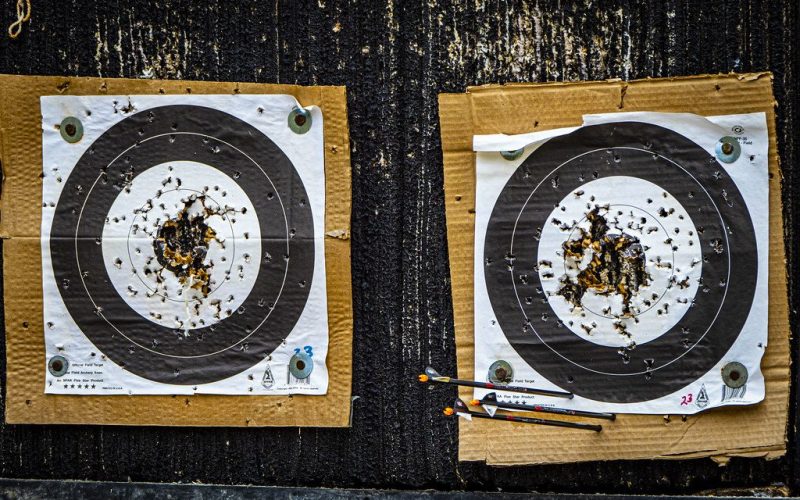
Reading a real animal is different from punching a bullseye. Practise on a 3D target from different angles and distances so you learn to find the vitals instantly. Shoot from the positions you will actually use — sitting, from a stand, or through a blind window. Train until picking the right spot becomes second nature.
After the shot
Watch where the deer runs and note landmarks. Then wait — often 30 minutes or more for a good hit — before tracking, so you do not push a wounded animal. Follow the blood trail patiently and be prepared to give it time. Ethical recovery is part of good shot placement.
Mistakes to avoid
⚠️ Aiming at the whole animal. That leads to misses. Fix: pick one small spot in the vitals.
⚠️ Taking bad angles. Quartering-toward and head-on shots risk wounding. Fix: wait for broadside or quartering-away.
⚠️ Tracking too soon. Pushing a deer ruins recovery. Fix: wait, then track carefully.
FAQ
Where do you aim on a deer with a crossbow?
The heart-lung zone, just behind the front shoulder and about a third of the way up, on a broadside deer.
Is a quartering-away shot good?
Yes, often excellent. Aim to drive the bolt through the vitals and exit near the far shoulder.
Should I take a quartering-toward shot?
Usually no. The shoulder blocks the vitals. Wait for a better angle.
How long should I wait before tracking?
For a good vital hit, often 30 minutes or more. Waiting prevents pushing a wounded animal.
Shot checklist ✅
- Confirm a broadside or quartering-away angle
- Pick one small spot behind the shoulder
- Make sure the vitals are open (near leg forward)
- Settle your breathing and squeeze
- Watch the animal and mark landmarks
- Wait, then track patiently
Affiliate disclosure: As an Amazon Associate, this site may earn from qualifying purchases at no extra cost to you.